
Blog ·
FHA Construction Loans for Manufactured Homes
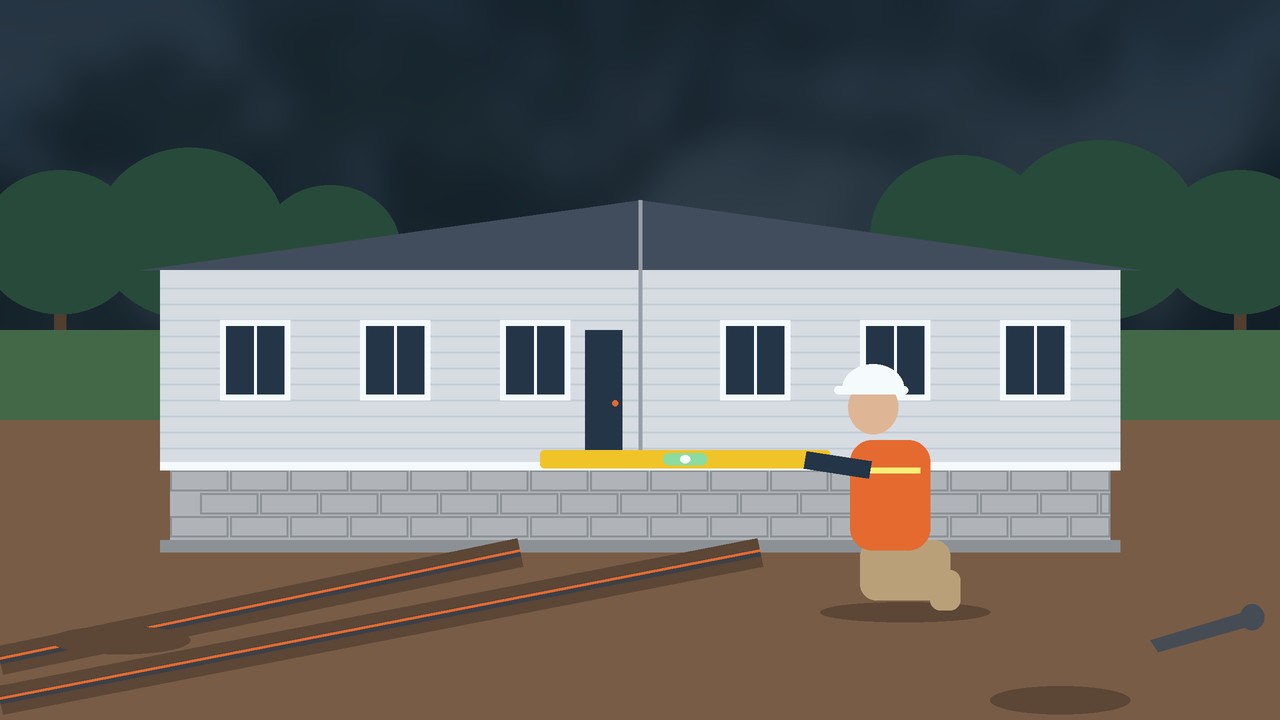
Yes, you can use an FHA construction-to-permanent loan to place a new manufactured home on land, as long as the home meets HUD's manufactured housing standards, sits on a permanent foundation, is titled as real property together with the land, and is your primary residence. Not every lender offers FHA construction loans for manufactured homes, and those that do often add their own limits on home width, size, and manufacturer.
Below we cover HUD's core rules, what lenders typically add, and how the process works from ordering the home to moving in.
Can you get an FHA construction loan for a manufactured home?
HUD's Construction to Permanent program lets you finance the land (if you're buying it), the home, and the site work with one FHA-insured loan and a single closing. New manufactured homes can be eligible, alongside site-built and modular homes.
The catch is availability. Many FHA lenders don't originate construction loans at all, and some construction lenders exclude manufactured homes. Ask any lender directly: "Do you offer FHA one-time close for a new manufactured home on my land?"
FHA can offer a low down payment option for eligible borrowers. Credit, income, property, and lender rules still apply, and requirements vary by lender.
Manufactured vs. modular: which one are you building?
This matters more than anything else on this list.
- Manufactured homes are built in a factory to the federal HUD Code (the Manufactured Home Construction and Safety Standards) and carry a red HUD certification label on each section.
- Modular homes are built in a factory to state and local building codes, the same codes as site-built homes, and lenders generally treat them like site-built construction.
If a dealer calls a home "modular" but it carries HUD labels, it's manufactured for lending purposes. Ask for the code path in writing. If your home is modular, see our guide to FHA construction loans for modular homes instead.
HUD's requirements for an FHA manufactured home
Under HUD's handbook, a manufactured home financed with FHA generally must:
- Be built after June 15, 1976, to the HUD Code, with the certification label attached to each section
- Have at least 400 square feet of living area (many lenders require more)
- Stay on its permanent chassis, with the towing hitch, wheels, and axles removed
- Sit on a permanent foundation that meets HUD's Permanent Foundations Guide for Manufactured Housing
- Be classified as real property and financed together with the land in a single mortgage
- Be your primary residence
- Meet flood rules: in a high-risk flood zone, the finished grade under the home must be at or above the base flood elevation, documented by an elevation certificate or a FEMA map amendment
The engineer's foundation certification
FHA requires a site-specific foundation certification from a licensed professional engineer or registered architect in your state confirming the foundation meets HUD's Permanent Foundations Guide. On a new build, line this up early. Your installer and engineer should agree on the foundation design before the home ships.
What lenders often add on top of HUD's rules
HUD sets the minimums. Construction lenders frequently go further. Common lender requirements include:
- New homes only. The home must be newly purchased and never installed or occupied anywhere else. Moving a used home onto your lot generally isn't eligible.
- Multi-section preferred. Some lenders allow only double-wide or larger homes. Others allow single-wides only from certain manufacturers.
- Higher minimum size than HUD's floor.
- Owned land only. You must own the lot outright (fee simple) or buy it with the loan. Leased lots and land-lease communities usually don't work.
- No add-on structures. Accessory dwelling units are often not allowed with a manufactured home.
- Higher credit standards than HUD's published minimums.
Because lender rules vary so much, compare lenders before you sign a purchase agreement with a dealer.
Who builds it: dealer, installer, and general contractor
A manufactured home build has more players than a stick-built one:
- The dealer or retailer sells you the home and coordinates the factory order.
- A licensed installer sets the home on the foundation. Most states require installer licensing.
- A general contractor often handles site prep, foundation, utilities, driveway, porches, and finish work.
Most FHA construction programs don't let you act as your own contractor or do the work yourself. Expect a fixed-price, all-inclusive contract that covers everything needed for a certificate of occupancy, including site work. If the dealer and contractor are separate companies, make sure the contract spells out who handles each step so nothing falls through the gap.
How the FHA manufactured home process works
- Confirm the lender offers FHA construction for manufactured homes, and get its property rules.
- Choose the home and dealer, and confirm it's HUD-Code, new, and meets size and width limits.
- Finalize the site plan, foundation design, and fixed-price contract.
- Apply, appraise, and underwrite. The appraiser values the finished home and land from your plans and contract.
- Close before work starts. Programs typically finance proposed construction only, so don't pour a foundation or deliver the home early.
- Build through draws. The lender releases funds as work is inspected, often around factory deposits, set day, and site finish.
- Finish and convert. After final inspection, a certificate of occupancy (or local equivalent), and the foundation certification, the loan moves to its permanent phase.
Does FHA mortgage insurance apply?
Yes. Like other FHA loans, an FHA manufactured home construction loan carries FHA mortgage insurance (MIP). Ask your lender for the estimate on your Loan Estimate.
What if FHA doesn't fit?
If a lender's FHA rules don't fit your home, ask about conventional options designed for newer factory-built homes, such as programs for qualifying MH Advantage or CHOICEHome properties. Requirements vary by lender.
Frequently asked questions
Can I use an FHA loan to put a manufactured home on my land?
Often, yes, through an FHA construction-to-permanent loan, if the home is new, meets HUD standards, is permanently affixed, and the lender offers the program.
Are single-wide manufactured homes eligible?
Sometimes. HUD doesn't ban them outright, but many lenders exclude single-wides or allow only certain manufacturers.
Do I need an engineer's certification?
Yes. FHA requires a site-specific certification from a licensed engineer or registered architect showing the foundation meets HUD's Permanent Foundations Guide.
Can I move a used manufactured home onto my lot with an FHA construction loan?
Usually not. Lenders generally require a new home that has never been installed or occupied at another site.
Can I put a manufactured home on leased land?
Generally not with FHA construction financing. The home and land must be financed together as real property you own.
Ready to place a new home on your land?
If you've picked out a manufactured home, or you're still comparing, get started at My Construction Path. Tell us about your land and your home, and we'll connect you with lenders who offer construction financing for manufactured homes in your area.
Requirements vary by lender, loan program, and location. This article is for general education and is not a commitment to lend. It is not a quote of rates, payments, or loan terms. Not affiliated with or endorsed by HUD or FHA.