
Blog ·
Can I Add Energy Upgrades to an FHA Construction Loan?
Last updated: November 3, 2026
By the My Construction Path editorial team
Often, yes. If you're building a custom home with FHA financing, the FHA Energy Efficient Mortgage (EEM) program can let you finance cost-effective energy upgrades that go beyond your local building code. The catch is that only the "above code" part counts, a home energy report has to prove the savings, and not every construction lender offers it.
Can FHA finance energy upgrades on a new custom home?
Yes. HUD's rules list new construction as an eligible property type for the EEM program, alongside existing homes, one-unit condos, and manufactured housing.
HUD defines the program this way in the HUD Single Family Housing Policy Handbook 4000.1 (EEM section dated April 29, 2019):
"The Energy Efficient Mortgage (EEM) program allows the Mortgagee to offer financing for cost-effective energy efficient improvements to an existing Property at the time of purchase or refinancing, or for upgrades above the established residential building code for New Construction."
That last phrase is the key for a custom build: your builder already has to meet code, so EEM only covers what you add on top.
What counts as an eligible upgrade on a new build?
An eligible upgrade is one that beats the code baseline and passes HUD's cost-effective test. That test asks whether the energy you'll save over the upgrade's useful life is worth more than its cost, including maintenance and repair.
For new construction, the handbook sets the baseline as the greater of the latest energy code HUD has adopted or the IECC edition your state or local code uses. Upgrades that often clear that bar include:
- A higher-efficiency heat pump or furnace than code requires
- Extra wall or attic insulation beyond code levels
- Higher-performance windows
- Better air sealing and duct sealing
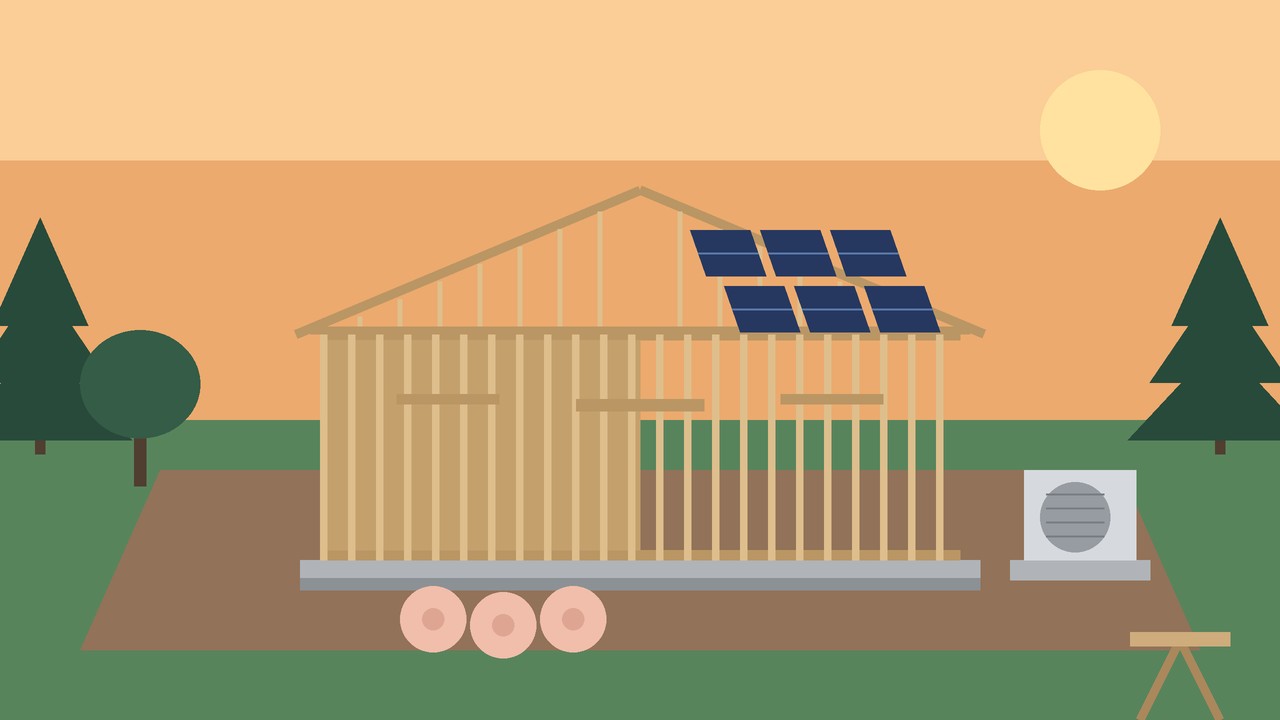
- Solar panels or a heat pump water heater
According to the U.S. Census Bureau's Characteristics of New Housing data on heating systems, 48 percent of new single-family homes completed in 2025 used a heat pump (data as of 2025, the latest annual figures). So a heat pump alone may not be "above code" where you build. Its efficiency level is what matters.
A qualified energy rater certified through the Building Performance Institute, RESNET, or your state's rules must produce the home energy report, and it can't be more than 120 days old.
How much can the energy package add to my FHA loan?
The energy package is capped, and it's usually a modest add-on rather than a second budget. As of November 2026, the HUD Handbook 4000.1 limits it to the lesser of the cost-effective amount in the energy report or 5 percent of the smallest of three figures: the home's adjusted value, 115 percent of the area median single-family price, or 150 percent of the national conforming mortgage limit.
Two features stand out, per the same handbook as of November 2026:
- The financed energy package may push the loan above the normal FHA loan limit for your area.
- You qualify on the base loan amount, not the base plus the energy package.
You still need the standard cash investment. As of November 2026, HUD's Programs of HUD 2025 summary says borrowers must make a minimum 3.5 percent cash investment (down payment), based on the lesser of the sales price or the appraised value.
Does EEM work with an FHA one-time close construction loan?
It can, but ask first. Not every lender that offers FHA construction loans offers EEM with them, and timing rules differ for new homes.
HUD's Programs of HUD 2025 puts it plainly:
"Energy improvements to a newly constructed home must be installed prior to closing."
That rule fits a finished new home or a two-time close well, where the permanent loan closes after the house is built. With an FHA one-time close loan, the loan closes before construction starts. So ask each lender how it handles the energy package on a single-close build, and get the answer in writing.
What if I change the energy package during the build?
You'll need paperwork. Per the handbook, if the work done differs from the approved energy package, a change order and a revised home energy audit go to the FHA underwriter for approval.
If the revised package still passes the cost-effective test, nothing more is needed. If it doesn't, the money for the work that isn't approved goes toward paying down your loan balance. Lock in your energy choices early, before rough-ins, to avoid surprises.
Is an FHA EEM worth it compared with other options?
It depends on your budget and your lender. Here's an honest look at the trade-offs:
| Option | Pros | Cons |
|---|---|---|
| FHA EEM on the build | Finances upgrades in the mortgage; qualify on the base loan | Extra paperwork; energy report required; not every lender offers it |
| Pay cash for upgrades | Simple; no audit needed | Uses savings you may need for closing or moving |
| Build to code only | Least upfront cost | Higher utility bills over time; harder to add some upgrades later |
| Add upgrades after move-in | Spreads out spending | Retrofits like wall insulation cost more once walls are closed |
What steps should I take before choosing upgrades?
- Ask your FHA construction lender whether it offers EEM on your type of build.
- Hire a qualified energy rater early, ideally while plans are still on paper.
- Have your builder confirm which code edition applies to your lot.
- Choose upgrades from the energy report that pass the cost-effective test.
- Put the energy package in your plans and contract before closing.
For more on what FHA expects from new builds, see our guides to FHA construction loan requirements and FHA new construction inspections and builder warranties.
Frequently asked questions
Do I have to qualify for the extra energy amount?
No. Per HUD's handbook, you qualify on the base loan amount. You still need to meet all other FHA and lender requirements.
Does the appraisal need to include the energy upgrades?
No. HUD's handbook says the appraisal doesn't need to reflect the energy package's value.
Can I get cash back if the energy package costs less than planned?
No. HUD doesn't allow cash back from an EEM. Any excess goes toward your loan balance.
Want an energy-smart custom home with FHA financing?
The right lender makes the energy package easier to plan. Get started at My Construction Path. Tell us about your lot, your plans, and the upgrades you have in mind, and we'll connect you with lenders who offer FHA construction loans.
Rates, down payments, credit scores, loan-to-value limits and other terms shown here are examples for general information only. They aren't an offer of credit or a commitment to lend. Actual terms vary by lender, borrower and property, change often, and are subject to credit approval. Ask each lender for an official Loan Estimate before you decide.
My Construction Path is not a lender and does not make loans or credit decisions. Not all borrowers will qualify. Equal Housing Opportunity. Requirements vary by lender, loan program, and location. This article is for general education and is not a commitment to lend. It is not a quote of rates, payments, or loan terms.